
For a fleet owner, owner-operator, or repair manager, replacing a turbocharger is rarely just a matter of finding the lowest advertised price. A turbo that fits the engine physically may still deliver the wrong air pressure, use incompatible connections, or fail to match the truck’s calibration. On a hard-working Caterpillar C15 engine, those differences can affect fuel economy, pulling power, exhaust temperature, and long-term reliability.
The better buying decision begins with compatibility. Price still matters, but it should be compared only after the replacement part has been matched to the engine, application, and expected workload.
Physical Fit Is Only the First Check
A replacement turbo must line up with the exhaust manifold, intake plumbing, oil supply and drain connections, and related mounting points. However, a part that bolts into place is not automatically the correct replacement.
Caterpillar C15 engines were used in different trucks, vocational applications, and production periods. Engine configuration, serial number, arrangement details, emissions equipment, and horsepower rating can all influence turbocharger selection. Two engines with the same basic displacement may require different components because their operating specifications are not identical.
Read More: Buying A Reconditioned Engine — A Wise Decision or A Dreadful Mistake?
Before ordering, collect the engine serial number and inspect the identification information on the existing turbocharger. Confirm the compressor and turbine housing configuration, connection locations, and any applicable part or casting numbers. These details give a parts supplier a stronger starting point than the truck model alone.
Airflow Must Match the Engine
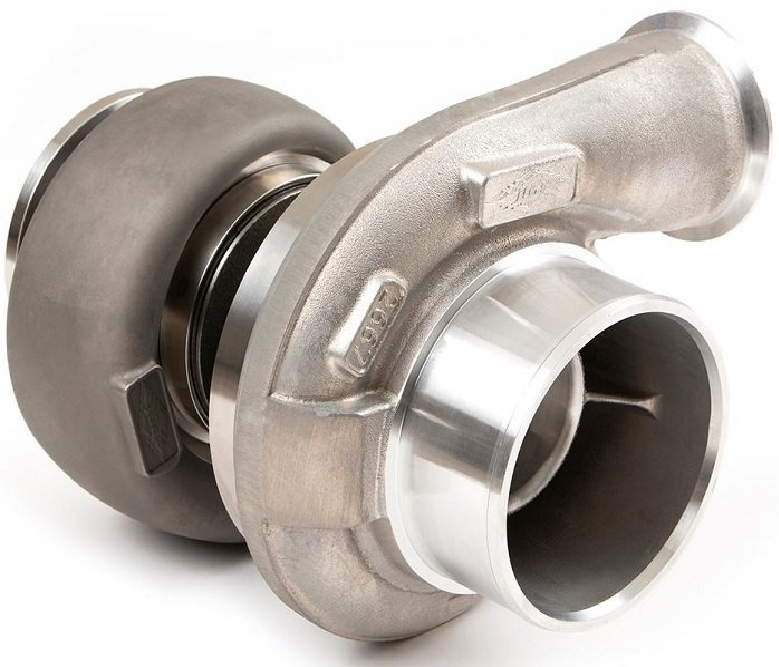
A turbocharger is part of the engine’s air-management system. Its compressor supplies pressurized air while the turbine uses exhaust energy to drive that compressor. The relationship between turbine size, compressor capacity, boost response, and engine calibration determines how the engine behaves under load.
An undersized replacement may respond quickly but struggle to supply enough air during sustained pulls. That can contribute to excessive exhaust temperature, smoke, and reduced performance. A turbo that is too large may delay boost response, making the truck feel weak at low engine speed and less useful in stop-and-go work or steep terrain.
The right component is not necessarily the largest or most aggressively priced option. It is the one engineered for the engine’s specifications and duty cycle.
Workload and Operating Conditions Change the Decision
A highway tractor traveling long distances at steady speed places different demands on its turbocharger than a dump truck hauling through construction sites. Logging, heavy vocational work, regional delivery, and mountain routes can each expose a replacement part to different heat cycles and load patterns.
This matters especially when a repair is being planned before a seasonal increase in demand. A landscaping or construction fleet preparing for spring work may have limited time to correct a poor parts choice. Likewise, a truck entering a winter hauling season in a cold, mountainous area needs dependable boost response and stable operation when loads, grades, and weather combine to increase engine demand.
Consider how the vehicle is actually used:
- Does it spend most of its time under heavy load?
- Are long uphill grades common?
- Is the engine frequently idling or operating at low speed?
- Has the truck been modified with changes to fueling, exhaust, or air intake?
- Is the replacement intended for a standard repair or a performance-oriented build?
These answers help determine whether an original-style replacement is the appropriate solution. For a parts reference, review a dedicated c15 turbo selection and then verify the listed specifications against the engine’s identification details.
The Lowest Upfront Cost Can Become the Highest Repair Cost
A mismatched turbocharger can create costs beyond the part itself. Installation labor may need to be repeated, downtime can interrupt deliveries, and an air or oil connection problem may damage the replacement quickly. Poor boost control can also lead to drivability complaints that are difficult to diagnose after the original component has been discarded.
Read More: Port and Terminal Operations: Reliable Cargo Handling with Commercial Vehicles
Before installation, inspect the air filter, intake piping, charge-air cooler, oil lines, and exhaust system. A restricted filter, leaking hose, contaminated oil supply, or damaged cooler can make a good turbo appear defective. After installation, confirm proper oil priming and check for leaks, unusual shaft noise, smoke, and abnormal boost behavior.
For business owners, compatibility is a form of cost control. Matching the turbocharger correctly the first time protects uptime, reduces repeat labor, and helps the engine deliver the performance the truck’s work requires. A careful comparison may take longer than choosing the cheapest listing, but it is far less expensive than correcting the wrong choice after the truck is back on the road.